Xabi Alonso's Coaching Journey at Real Madrid: A Clash of Styles
Exploring Xabi Alonso's coaching tenure at Real Madrid, which has seen a clash of coaching styles and a struggle to adapt to the demanding environment at the iconic club.
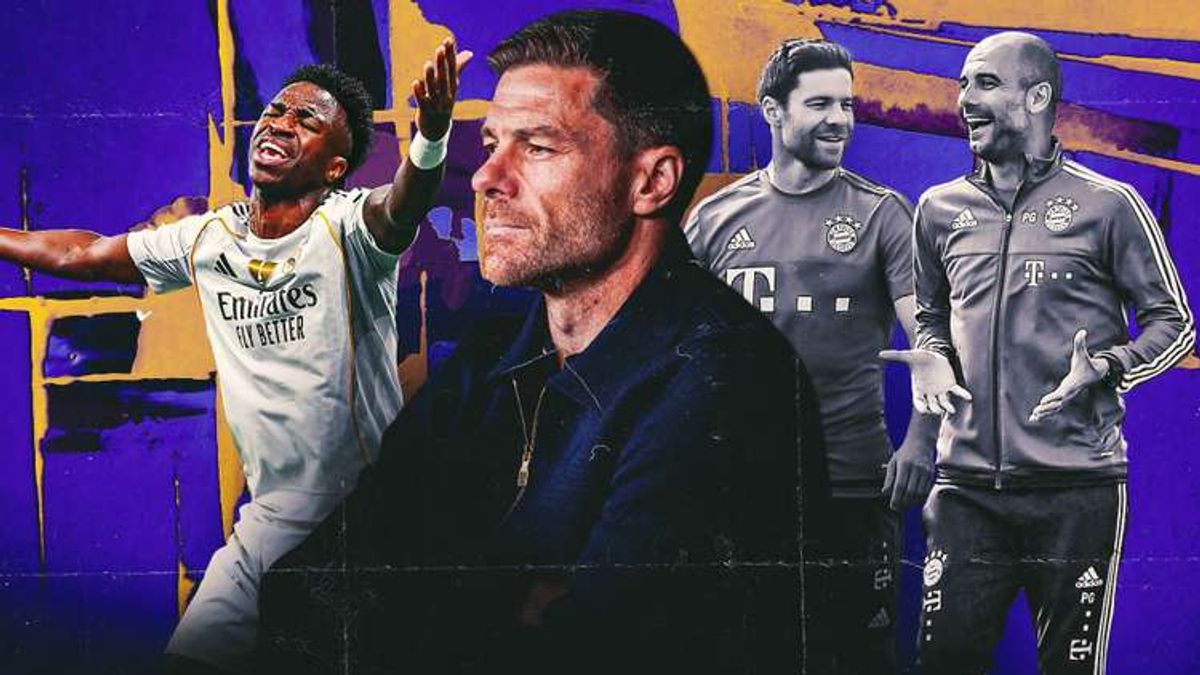
As a Real Madrid stalwart who was fiercely loyal to Jose Mourinho, Xabi Alonso did not seem like an obvious signing for Pep Guardiola, and yet the pair got on famously during their two years together at Bayern Munich. Alonso’s experience helped Guardiola win two Bundesliga titles while the veteran player sought to tap into the Catalan’s knowledge as he prepared for his own career on the touchline.Alonso’s playing career was just about the perfect apprenticeship for moving into coaching as he worked under some of the biggest names in the game, each with their own unique style. His five years at Liverpool were spent with Rafa Benitez, the arch strategist. His long spell at Madrid saw him work with three vastly different coaches in Manuel Pellegrini, Mourinho and Carlo Ancelotti. He ended his career working under the master of modern positional play in Guardiola for two years, before one final year reunited with Ancelotti.Guardiola could instantly see that Alonso was cut out for a successful career in the dugout, remarking: "Every single coach who ever had the marvellous pleasure of training Xabi as a player knew without any doubt that he'd become a coach," and working alongside Guardiola was clearly an insightful time for Alonso.“I learned a lot in three years in Bayern,” he said. “I was 32, I had made a lot of my career but in two or three years, I learned so, so much.”Alonso’s time with Guardiola evidently helped him succeed at Bayer Leverkusen, where he ended Bayern’s 11-year stranglehold on the Bundesliga title and lifted the DFB-Pokal during an unbeaten domestic campaign. But it did not necessarily set him up well for life at Madrid, and as he prepares to meet his former mentor in the dugout for the first time when Los Blancos face Manchester City on Wednesday amid a run of just two wins in seven matches, there is a feeling that defeat could spell the end of Alonso’s time at the Bernabeu.Guardiola’s coaching mentor was Johan Cruyff, and in his very first season as a coach with Barcelona’s B team he approached the legendary Dutchman about a dilemma: His best two players were undermining him. Cruyff’s message was clear: “Get rid of them.” Guardiola did as Cruyff advised and his team overcame a slippery start to storm to the title.Alonso has been confronted with a similar dilemma in the form of Vinicius Jr. According to The Athletic, Alonso’s dispute with the Brazil forward began during the Club World Cup, when Vinicius was furious with his coach for playing him on his less favoured right side in the 4-0 defeat to Paris Saint Germain in the semi-final. The tension between player and coach then came to a head in October after the player’s furious reaction to being substituted towards the end of the Clasico win over Barcelona. Vinicius released a grovelling apology on X to “all Madridistas, my team–mates, the club and the president“. Tellingly, he did not apologise to Alonso. Nonetheless, Vinicius was in the line up for Madrid’s next outing against Valencia. They won that game easily 4-0, but then their problems began. They lost at Liverpool, drew three consecutive league games at Rayo Vallecano, Elche and Girona, and then scraped past Olympiacos. They did easily beat Athletic Club 3-0 in their best performance of the season, only to follow it up with Sunday’s ill-tempered defeat at home to Celta Vigo.Alonso’s lenient treatment of Vinicius, which contrasted with Arne Slot dropping Mohamed Slot from the Liverpool squad following his rant about being "thrown under the bus", was twice mentioned during his press conference on Tuesday ahead of facing City. Despite the coach taking no action against Vinicius, the player is still apparently furious with his coach, and has decided to delay talks regarding a contract renewal until the summer, by which time Alonso could be gone.Alonso looked surprised when he was asked on Tuesday if he regretted taking Vinicius off in El Clasico. “I don’t know what the question is getting at. It was a decision in the moment and now we’re in another moment.”It was far from the only uncomfortable question he was asked, either, as queries from the assembled media ranged from, “Do you have the support of the whole squad?” to, “Do you feel alone?” and, “How do you cope with all these rumours about your future?”The rift with Vinicius is believed to just be the tip of the iceberg when it comes to Alonso’s relationship with the players. Another report in The Athletic recounted how Alonso told his squad soon after taking charge that they would have to run more and work harder. Alonso’s staff had spoken of “many bad habits” setting in under Ancelotti and the new coach established a new set of rules for the squad, emphasising the importance of punctuality and maintaining intensity in training. Alonso’s hands-on approach was in total contrast to that of Ancelotti, who was barely involved in training sessions, delegating them to other members of staff. And it rubbed players, many of whom had won multiple La Liga titles and Champions League crowns, up the wrong way. The most damning quote in the report came from a source close to a senior player, which read: “He thinks he’s Pep Guardiola, but for now he’s just Xabi.”The truth is that even Guardiola, leaving aside his past as a Barcelona player and coach for a second, would struggle to succeed at Madrid. The club has never been a safe haven for coaches. This is a club that has repeatedly sacked managers who have won La Liga or the Champions League, sometimes the very next day.While Barcelona venerated Cruyff and Guardiola and, for a couple of years, Frank Rijkaard, Madrid prefer their coaches to be lower key. It is why Mourinho, the ultimate rockstar of the management world, was such a divisive figure in the Spanish capital. By the end of his chaotic tenure, Alonso and Alvaro Arbeloa were the only allies the Portuguese had left after he fell out with Sergio Ramos, Iker Casillas and Cristiano Ronaldo. While Mourinho and Guardiola were sworn enemies when they were in charge of Spain’s biggest clubs for three years and are often painted as polar opposites, Alonso thought they were not so different after all, saying in 2016: “They are both very similar in that they are hard workers and extremely ambitious. On the football side, they have different approaches and style. What you get with both is huge charisma and leadership.”Florentino Perez has spent the majority of his 20-plus years as Real Madrid president changing his mind over whether or not the club's coach should have charisma and leadership. He grew tired of Vicente del Bosque despite im winning two La Liga titles and two Champions Leagues in less than four years. A four-year La Liga drought ensued after sacking Del Bosque. Fabio Capello, a traditional stern disciplinarian, ended the wait for a league crown but was fired because his football was deemed too boring. Pellegrini, meanwhile, oversaw an exciting brand of football but was seen as lacking charisma. Mourinho came in, his win-at-all-costs mentality galvanising a large section of supporters but alienating another. Ancelotti ended the 12-year wait to win another Champions League title, but his first stint only lasted two years, by the end of which he was seen as too lenient. So in came Benitez, who tried to give advice to Ronaldo on goal-scoring and to Luka Modric on passing. He was sacked five months into the season and replaced by Zinedine Zidane.Zidane won an unprecedented three consecutive Champions Leagues but, just like with Ancelotti, there was suspicion that he was too easy on the players and he resigned twice, the second time after relentless criticism. Naturally, he was replaced by Ancelotti, who won two more La Liga titles and two more Champions Leagues. The cycle from an antagonistic coach to a conciliator continued when Madrid hired Alonso, and his reign is following a predictable pattern.But while Perez still seems undecided about what profile works best, the players have never been in doubt. The words of Ramos after a 5-1 thrashing at Camp Nou in 2018 come to mind. Julen Lopetegui was about to be sacked and Antonio Conte was believed to be on his way, but Ramos made a compelling argument against the fiery Italian.“Respect is earned, it is not imposed,” Ramos declared. “How a coach handles the players is much more important than their technical knowledge.” Perez listened, turning to former player Santiago Solari on an interim basis before convincing Zidane to return.Alonso is being brutally reminded that overreaching coaches are not welcome at Madrid. As much as Alonso might have learned from Guardiola, Ramos would be able to tell him far more about navigating this most delicate of jobs.
The Alonso-Guardiola Connection
Xabi Alonso's fruitful time alongside Pep Guardiola at Bayern Munich highlighted his potential as a future coach, laying the foundation for his subsequent managerial roles.
Challenges at Real Madrid
Xabi Alonso's transition to Real Madrid has presented challenges, including player disputes and a departure from the coaching style of his predecessors, raising questions about his future at the club.
Coaching Dilemmas
A focus on the clash with Vinicius Jr. and other player-related issues sheds light on Alonso's approach to discipline and team management, illustrating the complexities of coaching at a high-pressure club like Real Madrid.
Historical Context at Real Madrid
A historical overview of Real Madrid's managerial changes and the club's preference for different coaching profiles underscores the demanding nature of the job and the conflicting expectations faced by coaches.
Lessons Learned
Xabi Alonso's coaching journey at Real Madrid serves as a valuable learning opportunity, highlighting the importance of adaptability, player management, and aligning coaching styles with the unique demands of the club.